
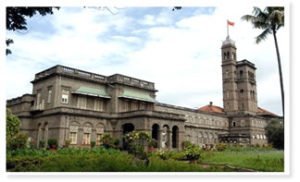
Savitribai Phule Pune University (university of pune)
SPPU Entrance Exam 2026-2027: Admission Process
Candidates will be admitted strictly based on merit in the Online Entrance Examination (OEE). The syllabus for each course’s entrance exam will be available on the respective department’s webpage.Exam Pattern:
- The OEE will be of 100 marks with Multiple Choice Questions (MCQs).
- The paper will have two sections:
- Section A (20 Marks): General Knowledge, Aptitude, Logic, and Comprehension.
- Section B (80 Marks): Subject-specific questions.
- Both sections will be conducted together.
- Time: 2 hours
- Negative Marking: 1/4th of the allotted marks will be deducted for each incorrect answer.
- The merit list will be based on the total score of Sections A and B.
- In case of a tie, preference will be given to candidates scoring higher in Section B.
- If the tie persists, marks obtained in the qualifying examination will be considered.
SPPU Entrance Exam 2026-2027 : Important Dates
| Event | Date |
|---|---|
| Start of Online Application | 13/04/2026 |
| Last Date to Apply | 15/05/2026 (11:59 PM) |
| Tentative Online Entrance Exam (PG Courses) Schedule | 01/06/2026 to 13/06/2026 |
- Admit cards (Hall Tickets) will be available for download 5 days before the exam using the candidate’s login credentials.
- Exam centers will be notified later, and changes in allotted centers will not be permitted.
SPPU Entrance Exam 2026-2027: Eligibility Criteria
Candidates appearing for the final year of their qualifying exam are eligible to apply. However, admission is subject to passing the qualifying examination before the final selection.SPPU Entrance Exam 2026-2027: Reservation Policy
Reservation for all categories will be applicable as per the Government of Maharashtra rules.SPPU Entrance Exam 2026-2027: Fees & Payment Mode
| Category | Fees (per course) |
|---|---|
| General Category | Rs. 1000/- |
| Reserved Categories | Rs. 800/- |
- Candidates applying for multiple courses must pay separate fees for each course.
- Payment can be made online via Debit/Credit Card, Net Banking, etc.
How to Apply for SPPU Entrance Exam 2026-2027?
Candidates must apply online through the official website: SPPU Online Application Portal.Required Documents:
- Marksheet of the qualifying examination (latest semester passed).
- Valid caste certificate / Non-creamy layer certificate (if applicable).
SPPU Psychology Entrance Exam 2026-2027: Important Details
| Event | Date |
|---|---|
| Start of Online Application | 13/04/2026 |
| Last Date to Apply | 15/05/2026 (11:59 PM) |
| Online Entrance Exam (PG Courses) | To be announced on the university website |
| Online Entrance Exam (UG Courses) | To be announced on the university website |
| Result Declaration | To be announced on the university website |
SPPU MA Psychology Admission 2026-2027: Student Intake & Fees
MA Psychology (Regular Course):
- Student Intake: 34
- Eligibility: BA/BSc in Psychology from a recognized university.
- Fees: Rs. 10,000 – 11,000 per year.
MA Psychology (Self-Supporting Course):
- Student Intake: 60
- Eligibility: BA/BSc in Psychology from a recognized university.
- Fees: Rs. 60,000 – 70,000 per year.
Conclusion
Savitribai Phule Pune University (SPPU) offers a wide range of courses through its Online Entrance Examination (OEE) for the academic year 2026-2027. Candidates aspiring to pursue Postgraduate, Graduate, Integrated, or Interdisciplinary courses must carefully go through the eligibility criteria, syllabus, and exam pattern before applying. Stay updated with the latest notifications by visiting the SPPU official website regularly. For more details and updates on SPPU admissions, bookmark this page and check back frequently!9. SPPU Psychology Entrance Exam 2026-2027 Syllabus
Savitribai Phule Pune University The Syllabus for Qualifying Online Entrance Examination (OEE) M. A. Psychology Admission Regular & Self-Supporting For the Academic Year 2026-2027
(G-1) FOUNDATIONS OF PSYCHOLOGYUnit 1: Psychology -Introduction:
1.1 Psychology : a Science, goals of psychology 1.2 The brief history & perspective of Psychology: (Structuralism, Functionalism, Gestalt, Psychoanalysis, Behaviorism) 1.3 Career Avenues in Psychology & Fields of Psychology: (Clinical, Industrial & Organizational, Educational, Social, Developmental, Health, Criminal & Forensic, Military, Sports, Neuropsychology, Environmental, Positive, Spiritual and Women & Child psychology.) 1.4 The Indian Psychology: Past and present 1.5 Application: Understanding Behaviour through Methods in Psychology
Unit 2: Cognitive processes:
2.1 Sensation, Attention and Perception, nature of perception, laws of perceptual organization 2.2 Learning- Classical and Operant conditioning, observational learning 2.3 Memory-processes, information processing model(s) 2.4 Forgetting: Theories of forgetting 2.5 Application: Techniques for improving memory.
Unit 3: Motivation and Emotion:
3.1 Motivation: Definition, Concept of Homeostasis & Maslow’s Hierarchy of Motivation 3.2 Types of Motivation: Physiological, Psychological & Social 3.3 Motivational Conflicts: Intra-Conflicts & Inter-Conflicts 3.4 Emotion: Definitions, Nature & Importance, Basic Emotions (Joy, Excitement, Tenderness, Sadness, Anger, Fear & Love) 3.5 Application: Conflict Resolving Skills
Unit 4: Personality and Intelligence:
4.1 Personality – Definitions, Nature 4.2 Personality as a set of traits: Cattell’s, Allport’s & Big Five Theory of Personality 4.3 Freud’s Psychoanalytical Theory of Personality and Transactional Analysis 4.4 Intelligence: Definitions, Theories of Intelligence (Gardner’s Theory, Cattell’s Theory of Intelligence) 4.5 Applications: Testing and enhancing Emotional intelligence.
(G-2) INTRODUCTION TO SOCIAL PSYCHOLOGY UNIT 1:Unit 1: Introduction: (Total 12 Lectures)
1.1 Definition, Brief history of social psychology (special emphasis on India), 1.2 Scope of social psychology 1.3 Levels of social behavior 1.4 Approaches towards understanding social behavior 1.5 Application: Community mental health
Unit- 2.Individual Level Processes (Total 12 Lectures)
2.1 Difference between Social Cognition & Social Perception. 2.2 Self –Concept: Nature, Self-regulation and self-presentation. 2.3 Attitude: Definition, components, Dimensions and formation of attitude 2.4 Prejudice: Causes. 2.5 Application: Formation of attitude and Prejudice eradication
Unit 3: Interpersonal processes: (Total 12 Lectures)
3.1 Interpersonal Attraction, Love 3.2 Pro-social Behavior 3.3 Locus of control, Increasing our helping nature. 3.4 Aggression: Meaning, Nature and Causes of Aggression 3.5 Application: Prevention and reducing aggression
Unit- 4.Group Dynamics (Total 12 Lectures)
4.1 Groups: When we join and when we leave, The benefits of joining 4.2 Cooperation and Conflict 4.3 Conformity; Factors affecting Conformity, Obedience & Authority 4.4 Group Decision Making 4.5 Application: Team Building
Psychology of Abnormal Behaviour -1
UNIT-I: ABNORMAL PSYCHOLOGY: AN OVERVIEW (12)
1- Abnormality: Meaning, Definition, Nature. 2- Historical Background of Abnormality. 3- Criteria of abnormal behaviour (Biological, Psychological, Socio-cultural) 4- Current Classification Systems: DSM-5 & ICD-10/11 an Overview.UNIT-II: ANXIETY DISORDERS, OBSESSIVE-COMPULSIVE DISORDERS (OCD), TRAUMA & STRESSOR RELATED DISORDERS
1- Generalized Anxiety Disorders: Nature, Types, Symptoms, Diagnostic Criteria & Causes. 2- Panic & Agoraphobia, Social Anxiety (Phobia): Nature, Symptoms, Diagnostic Criteria & Causes 3- Obsessive-Compulsive Disorder and Body Dimorphic Disorders: Nature, Symptoms, Diagnostic Criteria & Causes 4- Post-Traumatic Stress Disorder & Acute Stress Disorder: Nature, Symptoms, Diagnostic Criteria & CausesUNIT-III: SOMATOFORM AND DISSOCIATIVE DISORDERS (11)
1- Somatic symptoms Disorder: Nature, Symptoms, Diagnostic Criteria & Causes 2- Illness Anxiety Disorder: Nature, Symptoms, Diagnostic Criteria & Causes 3- Conversion Disorders: Nature, Types, Symptoms, Diagnostic Criteria & Causes 4- Dissociative Identity Disorders: Nature, Types, Symptoms, Diagnostic Criteria & CausesUNIT-IV: DEPRESSIVE AND BIPOLAR DISORDERS (11)
1- Disruptive Mood Dysregulation Disorder, Major Depressive Disorder: Nature, Symptoms, Diagnostic Criteria & Causes 2- Bipolar-I Disorder: Nature, Types, Symptoms, Diagnostic Criteria & Causes 3- Bipolar-II Disorder: Nature, Types, Symptoms, Diagnostic Criteria & Causes 4- Suicide and Cyclothymic Disorder: Nature, Symptoms, Diagnostic Criteria & CausesDSE-2A : Developmental Psychology
Unit- I: Introduction to Lifespan Development
1- The Life-Span Perspective: The Importance of Studying Life- Span Development, Characteristics of the Life-Span Perspective, Some Contemporary Concerns 2- The Nature of Development: Biological, Cognitive, and Socio emotional Processes, Periods of Development, The Significance of Age, Developmental Issues 3- Theories of Development: Psychoanalytic Theories, Cognitive Theories, Behavioral and Social Cognitive Theories, Ethological Theory, Ecological Theory, Eclectic Theoretical Orientation 4-Research in Life-Span Development: Methods for Collecting Data, Research Designs, Time Span of Research.Unit- II: Biological Beginnings & Prenatal Development
1- Genetic foundation of Development: The Collaborative Genes, Genes and Chromosomes, Genetic Principles, Chromosomal and Gene linked Abnormalities 2- Heredity and Environment interaction: The nature × Nurture Debate.3- a) The Teratology and Hazards to prenatal Development b) Reproductive Challenges and Choices 4- The Course of Prenatal Development and Birth Process 5- Assessing the NewbornUnit – III: Infancy
1- Physical growth and development in infancy 2- Motor, Sensory and Perceptual Development, Cognitive Development 3- a) Piaget’s Theory of Infant Development b) Learning, Remembering, and Conceptualizing 4- Language DevelopmentUnit-IV: Early Childhood
1- Physical changes, Cognitive Changes 2- a) Piaget’s preoperational stages b) Vygotsky’s Theory 3- The Self, Emotional and Moral Development 4- Families, Peer relations and PlaySEC- 1A: Health Psychology (G2)
Learning Outcomes: After the completion of this course students will be able to: 1: Understand health psychology and arrive at the introduction to the role of psychology in health. 2: Understand the nature of stress and coping 3: Understand various factors related to health and diseases. 4: Understand quality of life and promoting the good health.Unit-I: An Introduction to Health Psychology (12)
1- Health Psychology – Definitions, Nature, Aims 2- Biopsychosocial Model of Health 3- Psychology’s Role in Health – Problems in the HealthCare System, ‘‘The Person’’ in Health and Illness, How the Role of Psychology Emerged and Progress in Health Psychology’s Goals. 4- Application: The Need of Health Psychology- Changing Patterns of Illness, Expanded Health Care Services, Increased Medical AcceptanceUnit-II: Stress and Coping (11)
1- Stress – Definitions, Nature & Types 2- Sources of Stress – (Sources within the Person, Sources in the Family & Sources in the Community and Society) 3- Responding to Stress (Physiological, Emotional & Behavioural Response) 4- Coping Behaviour – Problem Focused coping (Ellis’s rational thinking, Positive reinterpretation & Humor as a stress reducer) & Emotion Focused Coping (Using systematic problem solving, using time more effectively & improving self-control)Unit-III: Chronic Health Problems and Its Management (11)
1- Personal Issues in Chronic Health Disorders – The Physical Self, Achieving Self, Social Self & Private Self 2- Emotional Responses to Chronic Health Disorders – Denial, Anxiety & Depression 3- Major Chronic Health Problems- Heart Disease, Hypertension, Stroke, Cancer, Type II Diabetes & AIDS 4- Application: Psychological Interventions for Chronic Health Disorders (Pharmacological Interventions, Individual Therapy, Social Support Interventions and Relaxation, Stress Management after COVID-19)Unit-IV: Primary Prevention & Health Promotion (11)
1- Quality of life and Health Behaviour – Changing Health Habits & Health Beliefs (Attitude change & Placebo Effect) 2- Health Compromising Behaviours (Characteristics) – Obesity, Smoking & Drinking. 3- Developmental, Gender, and Sociocultural Factors in Health – Development and Health, Gender and Health, Sociocultural Factors and Health 4- Health Promoting Behaviours – Diet, Exercise, Sleep, Rest, Vaccination and Screening, Accident preventionDSE-1B: PSYCHOLOGY OF ABNORMAL BEHAVIOR-II
Learning Outcomes:After the completion of this course students will be able to:- Learn descriptions, and theories underlying diagnostic nosology of psychiatric disorders.
- Learn and understand benefits, critiques, limitations, and implications of diagnosis and classification.
- Help students to acquire the knowledge about the symptoms, diagnostic criteria, and causes of various psychological disorders.
- Examine multiple probable causes and correlates of behaviour.
- Create awareness about mental health problems in society.
UNIT-I: SCHIZOPHRENIA & OTHER PSYCHOTIC DISORDERS (12)
1.1 Schizophrenia: Nature, Types, Symptoms, Diagnostic Criteria & Causes 1.2 Schizophreniform Disorder: Nature, Types, Symptoms, Diagnostic Criteria & Causes 1.3 Schizoaffective Disorder: Nature, Types, Symptoms, Diagnostic Criteria & Causes 1.4 Delusional Disorder: Nature, Types, Symptoms, Diagnostic Criteria & CausesUNIT-II: PERSONALITY DISORDERS AND IMPULSE CONTROL DISORDERS (11)
2.1 Characteristics of Personality Disorder and Gender Differences 2.2 Personality Disorders Characterized by Odd or Eccentric Behavior: Paranoid, Schizoid 2.3 Personality Disorders Characterized by Dramatic, Emotional, or Erratic Behavior: Antisocial, Borderline, Histrionic, & Narcissistic – Nature, Symptoms, Diagnostic Criteria & Causes Dependent, & Obsessive- Compulsive – Nature, Symptoms, Diagnostic Criteria & Causes 2.4 Personality Disorders Characterized by Anxious or Fearful Behavior: Avoidant, Schizotypal – Nature, Symptoms, Diagnostic Criteria & CausesUNIT-III: EATING DISORDERS, SLEEP-WAKE DISORDERS, SEXUAL DISORDERS, SUBSTANCE-RELATED AND ADDICTIVE DISORDERS (11)
3.1 Eating Disorders (Anorexia Nervosa, Bulimia Nervosa, & Binge- Eating Disorder): Nature, Symptoms, Diagnostic Criteria & Causes 3.2 Sleep-Wake Disorders (Insomnia disorder, hyper somnolence disorder, Narcolepsy. Breathing related sleep disorder, Circadian rhythm sleep-wake Disorder): Nature, Symptoms, Diagnostic Criteria & Causes 3.3 Alcohol Related Disorders (Alcohol use Disorder, Alcohol Intoxication, Alcohol Withdrawal): Nature, Symptoms, Diagnostic Criteria & Causes 3.4 Gambling Disorder, Internet and Cell phone Addiction : Nature, Symptoms, Diagnostic Criteria & CausesUNIT-IV: NEURODEVELOPMENTAL DISORDERS (11)
4.1 Autism Spectrum & ADHD: Nature, Types, Symptoms, Diagnostic Criteria & Causes 4.2 Intellectual Disability: Nature, Types, Symptoms, Diagnostic Criteria & Causes 4.3 Communication Disorders: Nature, Types, Symptoms, Diagnostic Criteria & Causes 4.4 Learning Disorders: Nature, Types, Symptoms, Diagnostic Criteria & CausesDSE- 2B: Theories of Personality
Unit-I: Introduction to Personality (12)
1- Nature and Definitions 2- Misconceptions, Determinants of personality 3- Idiographic and nomothetic approach 4- Classification of personality theoriesUnit-II: Psychodynamic perspectives (11)
1- Introduction to Psychodynamic perspective 2- Freud’s classical psychodynamic theory 3- Jung’s Analytical Psychology 4- Adler’s individual psychologyUnit-III: Behavioral perspectives (11)1- Pavlov’s classical conditioning 2- Skinners operant conditioning 3- Bandura’s social cognitive theory 4- Dollard and Millers stimulus- response theoryUNIT-IV: Trait & Motivation, Emotion perspectives (11)
1- Allports traits theory, Cattells factor theory 2- Eysenck , Costa &McCrae theory 3- Carl Rogers person centered theory 4- Motivation and Emotion perspectives ● Murrays Need theory ● Lazarus cognitive mediation theoryPositive Psychology
Unit-I: Meaning, Definition and Nature of Positive Psychology (12)
1. Definitions and Nature of Positive Psychology. 2. Traditional Psychology, Assumptions and Goals of Positive Psychology. 3. Fields of Positive Psychology. 4. The Nun study: Living longer with positive emotions.Unit-II: Happiness and the Facts of Life (11)
1. Psychology of well-being. Positive affect and Meaningful Life 2. Subjective Well-being: Hedonic basis of happiness. 3. Self-Realization: The Eudaimonic basis of happiness 4. Happiness Across the Life Span, Gender and happiness, Marriage and happiness, other facts of life.Unit-III: Positive Emotions, Wellbeing and Resilience (11)1. What are positive emotions? The Broaden and Build Theory of Positive Emotions. 2. Positive Emotions and Health Resources: Physical, Psychological and Social Resources. 3. Positive emotions & well-being, Flow experiences and Savoring. 4. What is resilience? Perspectives of Resilience, Resilience Research, Growth through Trauma.Unit-IV: Personal Goals, Positive Traits and Life above Zero. (11)
1. What are personal goals? The Search for Universal Human Motives, Materialism and its discontents. 2. What makes a trait positive? Personality, Emotions and Biology. 3. Positive beliefs, Virtue and Strengths of Character. 4. Logotherapy: Basic concepts, Contours of positive life: Meaning and Means, Mindfulness and Well-being. To Read more http://sppudocs.unipune.ac.in/sites/news_events/Lists/News%20and%20Announcements/Attachments/8428/Notification%20Admission%202024-25_19042024.pdfNiwlikar, B. A. (2026, April 13). SPPU Entrance Exam 2026-2027: Online Application from, Dates, Eligibility, Fees & Syllabus. Careershodh. https://www.careershodh.com/sppu-entrance-exam-2026-2027-online-application-from-dates-eligibility-fees-syllabus/