Cluster-C Personality Disorders: Diagnostic Features, 3 Important Types, Causes and Treatment

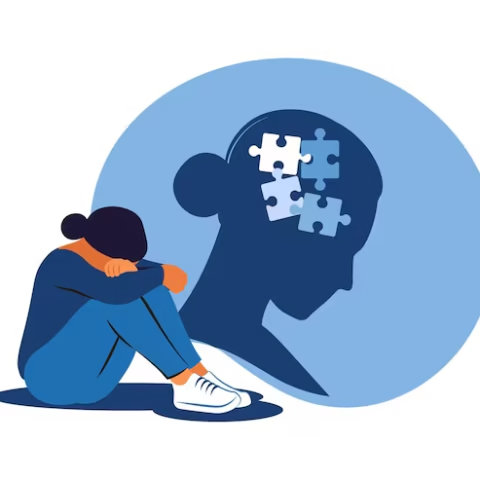
Introduction Cluster-C Personality Disorders, classified in the DSM-5 under the group of “anxious and fearful” personality patterns, are characterized by pervasive anxiety, chronic fearfulness, and maladaptive behaviors driven by insecurity, Read More…

Cluster-B Personality Disorders: Features, 4 Important Types, Causes, and Treatment

Introduction Cluster-B personality disorders constitute one of the most widely studied and clinically challenging groups within the DSM-5 classification. They are commonly described as the dramatic, emotional, and erratic cluster, Read More…

Cluster-A Personality Disorders: Features, 3 Important Types, Causes, and Treatment

Introduction Personality disorders are enduring, pervasive, and inflexible patterns of thinking, feeling, and behaving that deviate sharply from cultural expectations and lead to significant impairment in interpersonal, occupational, and emotional Read More…

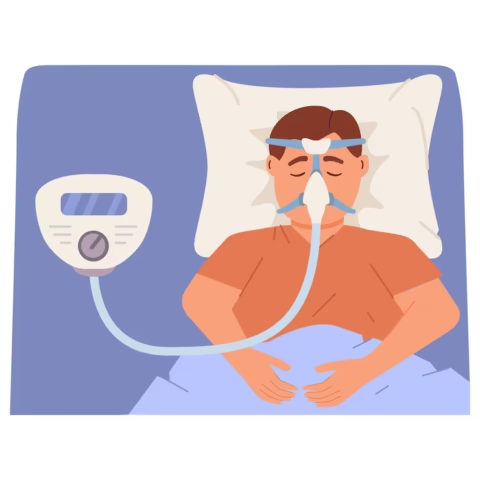
4 Important Sleep-Wake Disorders: Diagnosis, Etiology, Treatments & Interventions

Introduction Sleep is a biologically essential state that supports cognitive processing, emotional regulation, metabolic restoration, and immune functioning. When sleep quantity, quality, timing, or architecture are disrupted, the consequences extend Read More…

Sexual Cycle & 8 Important Sexual Dysfunction Disorders: Diagnosis, Causes, and Treatments

Introduction Human sexuality is a central aspect of physical and emotional well-being. It involves biological processes, psychological experiences, relational dynamics, and sociocultural influences. When these factors function harmoniously, individuals typically Read More…

4 Important Dissociative Disorders: Features, Etiology and Treatments

Introduction Dissociative disorders are a group of psychological disorders characterized by disruption in the normally integrated functions of consciousness, memory, identity, emotion, perception, body representation, and behavior (APA, DSM-5, 2013). Read More…

Cognitive Rehabilitation and 2 Important Approaches to It

Introduction Cognitive rehabilitation is a structured therapeutic process aimed at restoring or compensating for impaired cognitive functions following brain injury, neurological disease, or psychiatric conditions. It encompasses a range of Read More…

2 Important Memory Scales

Introduction Memory is a fundamental component of human cognition, influencing perception, learning, problem-solving, and daily functioning. Assessment of memory functions is central to understanding psychological and neurological disorders, as impairments Read More…

3 Important Dementia and Cognitive Impairment Assessment

Introduction Cognitive impairment and dementia are among the most pressing neuropsychological concerns of the 21st century. Dementia refers to a group of progressive neurological disorders characterized by deterioration in memory, Read More…

4 Important Assessment for Neurodevelopmental Disorders

Introduction Neurodevelopmental disorders are a group of conditions characterized by early-onset impairments in cognitive, social, communicative, or behavioral development (American Psychiatric Association [APA], 2022). Accurate assessment of these disorders is Read More…

3 Important Intellectual Disability Assessment Techniques

Introduction Assessing intellectual functioning is a cornerstone of clinical psychology, particularly in diagnosing and understanding intellectual disability (ID) and related developmental disorders. Intellectual disability involves significant limitations in both intellectual Read More…

2 Important Projective Techniques: Rorschach Inkblot Test and Thematic Apperception Test (TAT)

Introduction Projective techniques occupy a unique and enduring place in the field of clinical and abnormal psychology. Emerging from psychoanalytic traditions, these methods are based on the assumption that individuals Read More…