4 Important Bipolar Disorders: Bipolar I, Bipolar II, Cyclothymic Disorder, Dysthymic Disorder, and Suicide

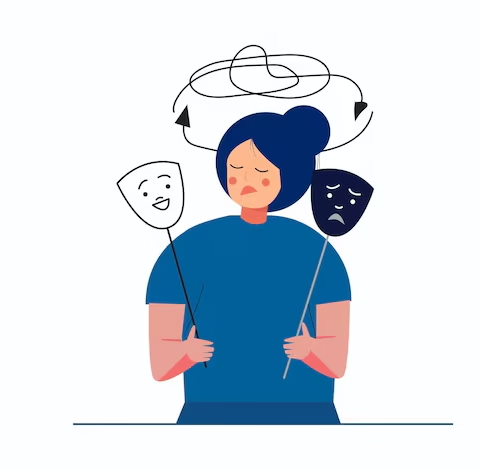
Introduction Bipolar disorders are severe mood disorders characterized by alternating episodes of mania or hypomania and depression. They are chronic, recurrent conditions that significantly impair functioning, relationships, and quality of Read More…

4 Important Depressive Disorders: Diagnostic Criteria, Etiology, and Treatment

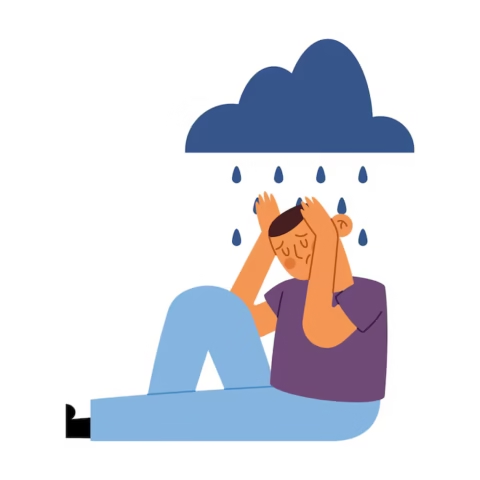
Introduction Depressive disorders constitute a group of psychiatric conditions characterized by persistent disturbances in mood, cognition, and behavior. They represent some of the most prevalent mental health disorders globally, significantly Read More…

3 Important Traumatic Stress Disorders: Post-Traumatic Stress Disorder (PTSD), Acute Stress Disorder, and Adjustment Disorders

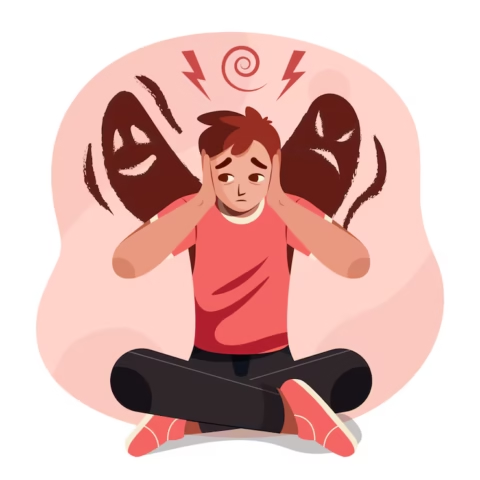
Introduction Traumatic stress disorders arise following exposure to stressful or traumatic events that overwhelm an individual’s ability to cope (APA, 2013). These disorders significantly impair emotional, cognitive, and social functioning. Read More…

Obsessive-Compulsive and 5 Important Related Disorders: Classification, Etiology, and Treatment

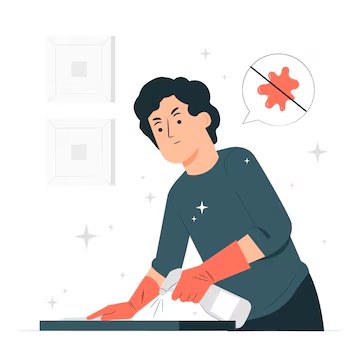
Introduction Obsessive-Compulsive and related disorders are a distinct category of psychiatric conditions characterized by intrusive thoughts, repetitive behaviors, and compulsions that cause significant distress and functional impairment. The DSM-5 (APA, Read More…

3 Important Motor Disorders: Features, Causes, and Treatment

Introduction Motor Disorders are a subset of neurodevelopmental disorders characterized by impairments in motor function, coordination, or the presence of repetitive, involuntary movements. These disorders often emerge in childhood and Read More…

Specific Learning and Communication Disorders: Classifications, Types, Etiology, and 4 Important Treatment

Introduction Specific Learning and Communication Disorders constitute a group of neurodevelopmental disorders characterized by difficulties in acquiring and using academic skills or language despite adequate intelligence, motivation, and educational opportunities. Read More…

Schizophreniform Disorder.

American Psychological Association refers Schizophreniform disorder as a disorder whose essential features are identical to those of schizophrenia except that the total duration is between 1 and 6 months (i.e., Read More…

Bipolar-II Disorder.

APA refers bipolar II disorder, as a disorder in which the individual fluctuates between major depressive and hypomanic episodes; and cyclothymic disorder. The former official name for bipolar disorders, manic-depressive Read More…

Conversion Disorders.

The term conversion has been used off and on since the Middle Ages (Mace, 1992) but was popularized by Freud, who believed the anxiety resulting from unconscious conflicts somehow was Read More…

Illness Anxiety Disorder.

Illness anxiety disorder was formerly known as “hypochondriasis,” which is still the term widely used among the public. In illness anxiety disorder, physical symptoms are either not experienced at the Read More…