


Recent Posts

Case History and Mental Status Examination: 4 Important Significance and Format
Introduction The accurate assessment of mental disorders depends not only on standardized diagnostic systems such as the DSM-5 and ICD-11 but also on the clinician’s ability to gather a detailed
Overview of 4 Important Diagnostic Systems: DSM-5, ICD-11, SCID-5, and WHODAS 2.0
Introduction In clinical psychology and psychiatry, the accurate classification, diagnosis, and assessment of mental disorders are crucial for effective treatment, research, and communication among professionals. Diagnostic systems such as the
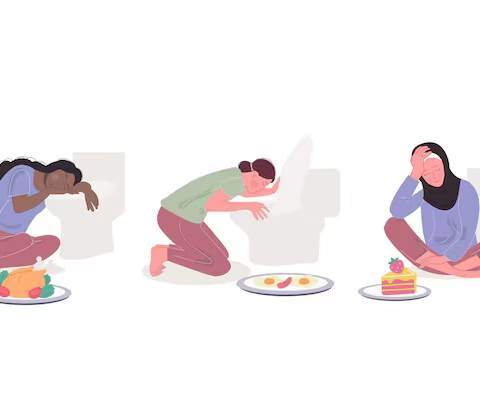
4 Important Eating Disorders: Classification, Etiology, and Treatment
Introduction Eating disorders are serious psychiatric conditions characterized by abnormal eating behaviors, disturbed body image, and maladaptive attitudes toward food, weight, and shape. They are associated with high morbidity and

3 Important Somatic Symptom and Related Disorders
Introduction Somatic Symptom and Related Disorders (SSRDs) represent a cluster of psychiatric conditions in which individuals experience physical symptoms or health concerns that are not fully explained by organic pathology.
CRPF Psychologist Walk-in Interview 2025 | ₹55,000 Salary, Apply Now!
CRPF Psychologist Walk-in Interview The Central Reserve Police Force (CRPF) has announced a walk-in interview for the engagement of Psychologist (Grade-I) and Nutritionist on a contractual basis. This is a
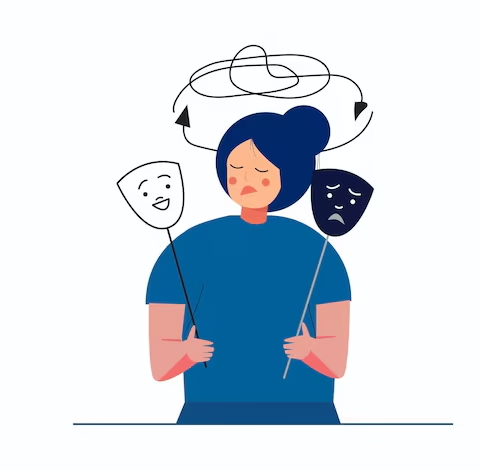
4 Important Bipolar Disorders: Bipolar I, Bipolar II, Cyclothymic Disorder, Dysthymic Disorder, and Suicide
Introduction Bipolar disorders are severe mood disorders characterized by alternating episodes of mania or hypomania and depression. They are chronic, recurrent conditions that significantly impair functioning, relationships, and quality of
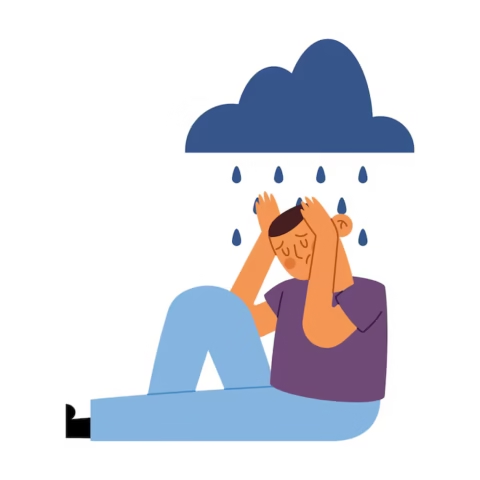
4 Important Depressive Disorders: Diagnostic Criteria, Etiology, and Treatment
Introduction Depressive disorders constitute a group of psychiatric conditions characterized by persistent disturbances in mood, cognition, and behavior. They represent some of the most prevalent mental health disorders globally, significantly
3 Important Traumatic Stress Disorders: Post-Traumatic Stress Disorder (PTSD), Acute Stress Disorder, and Adjustment Disorders
Introduction Traumatic stress disorders arise following exposure to stressful or traumatic events that overwhelm an individual’s ability to cope (APA, 2013). These disorders significantly impair emotional, cognitive, and social functioning.

2 Important Stress Disorders: Reactive Attachment Disorder (RAD) and Disinhibited Social Engagement Disorder (DSED)
Introduction Stress disorders in childhood represent significant disruptions in emotional regulation, social functioning, and attachment behaviors. Among these, Reactive Attachment Disorder (RAD) and Disinhibited Social Engagement Disorder (DSED) are particularly
Obsessive-Compulsive and 5 Important Related Disorders: Classification, Etiology, and Treatment
Introduction Obsessive-Compulsive and related disorders are a distinct category of psychiatric conditions characterized by intrusive thoughts, repetitive behaviors, and compulsions that cause significant distress and functional impairment. The DSM-5 (APA,
5 Important Types of Anxiety Disorders: Classifications, Types, Etiology, and Treatments
Introduction Anxiety is a normal human emotion that serves as a survival mechanism, preparing the body to respond to potential threats through the “fight or flight” response. However, anxiety disorders

3 Important Motor Disorders: Features, Causes, and Treatment
Introduction Motor Disorders are a subset of neurodevelopmental disorders characterized by impairments in motor function, coordination, or the presence of repetitive, involuntary movements. These disorders often emerge in childhood and