



Recent Posts

Neuropsychological Assessments and 6 Important Core Domains In It
Introduction Neuropsychological assessments is a cornerstone of modern clinical practice in understanding how brain functioning affects behavior. It goes beyond routine mental status exams by using validated, standardized tools to
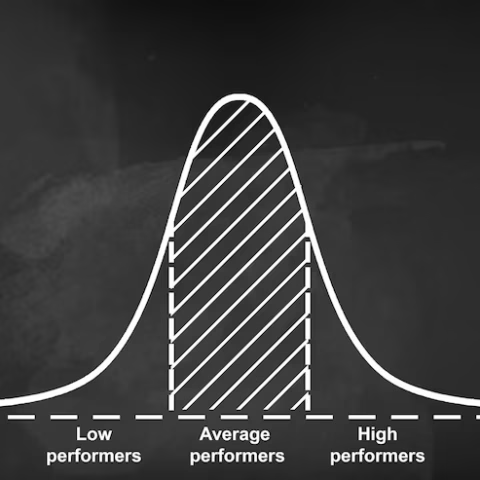
Probability and 5 Important Properties of the Normal Distribution Curve
Introduction Probability theory and the normal distribution curve represent two of the most foundational concepts in the field of statistics, especially within disciplines like psychology, education, sociology, and other social

Percentiles, Percentile Ranks, and Standard Scores: 3 Important Concepts in Statistics
Introduction In psychological and educational measurement, one of the major challenges is interpreting individual performance in a way that is meaningful, accurate, and comparable across different tests, populations, and contexts.

3 Important Measures of Central Tendency
Introduction In the fields of psychology and education, data collection and interpretation play a crucial role in informing decision-making, evaluating outcomes, and conducting research. Descriptive statistics are foundational tools that

Brain Plasticity and 4 Important Mechanisms of It
Introduction Contrary to early beliefs that the adult brain is a static organ, contemporary neuroscience confirms that the brain remains plastic throughout life. Neuroplasticity involves several processes—neurogenesis, synaptic pruning, dendritic

4 Important Brain Lobes Their Structure, Functions, and Associated Disorders
Introduction The cerebral cortex of the human brain is divided into brain lobes that reflect both structural and functional specializations. These lobes—frontal, parietal, temporal, and occipital—coordinate complex processes such as

Mechanism of Hormone Action and 3 Important Classifications of Hormones
Introduction Hormones are chemical messengers secreted by endocrine glands into the bloodstream, influencing target cells at distant sites. Unlike neurotransmitters, which act quickly and locally, hormones have broader, systemic effects

Programme Evaluation Research and 7 Important Steps In It
Introduction Programme evaluation research is a systematic method for collecting, analyzing, and using information to answer questions about projects, policies, and programs, particularly about their effectiveness and efficiency. It plays

3 Types of Psychological Scaling and Their Important Strengths-Limitations
Introduction Psychological scaling is a method used to quantify the relationship between physical stimuli and the sensations and perceptions they produce. It bridges the gap between objective physical measurements and

Important Characteristics of Quasi-Experimental Designs and 5 Types of It
Introduction Quasi-experimental designs are widely utilized in fields such as education, healthcare, public policy, and the social sciences, especially in contexts where conducting true experiments (i.e., randomized controlled trials) is

Qualitative Data Analysis and 4 Important Tools for Analysis
Introduction Analyzing qualitative data analysis involves systematically examining non-numerical information to identify patterns, themes, meanings, and insights. The purpose is not just to describe the data, but to interpret and

Qualitative Research Method and Its 5 Important Characteristics
Introduction Qualitative research is a methodological approach that seeks to understand human experiences, behaviors, and social phenomena through the collection and analysis of non-numerical data. Qualitative research is concerned with