
Introduction
Mental disorders represent complex disturbances in cognition, emotion, and behavior that cause significant distress and impair functioning. Their classification and diagnosis are fundamental for research, treatment, and policy formulation. Over the years, two globally recognized diagnostic systems—the Diagnostic and Statistical Manual of Mental Disorders, Fifth Edition (DSM-5) published by the American Psychiatric Association (2013) and the International Classification of Diseases, Eleventh Revision (ICD-11) published by the World Health Organization (WHO, 2019)—have emerged as standard frameworks.
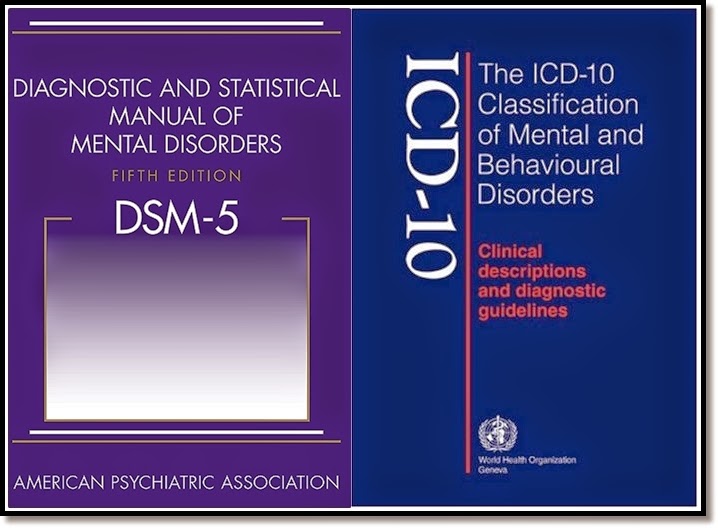
DSM and ICD
Read More: Anxiety Disorders
Defining Mental Disorder
The DSM-5 defines a mental disorder as:
“A syndrome characterized by clinically significant disturbance in an individual’s cognition, emotion regulation, or behavior that reflects a dysfunction in the psychological, biological, or developmental processes underlying mental functioning” (American Psychiatric Association, 2013).
Key aspects of this definition include:
- Disturbance in mental functioning: observable through symptoms.
- Clinical significance: symptoms must cause distress or impairment.
- Underlying dysfunction: biological, psychological, or developmental.
- Exclusion of expected responses: such as grief or cultural variations.
This conceptualization aligns with earlier psychological perspectives (Davison, Neal, & Kring, 2004; Butcher, Mineka, & Hooley, 2014) that emphasize maladaptive patterns and the departure from normative functioning.
Criteria for Diagnosis
The DSM (Diagnostic and Statistical Manual of Mental Disorders) is published by the American Psychiatric Association and is primarily used in the United States and in research worldwide. It provides standardized diagnostic criteria, symptom checklists, and categories for mental disorders, aiming to improve reliability and consistency in clinical diagnosis (APA, 2013).
The ICD (International Classification of Diseases) is developed by the World Health Organization and is used globally as the official classification system for all health conditions, including mental and behavioral disorders. Unlike the DSM’s checklist approach, the ICD emphasizes clinical descriptions and is designed to be culturally adaptable and applicable across diverse health systems (WHO, 2019).

ICD vs DSM
DSM-5 Criteria
The DSM-5 provides operationalized criteria for over 300 disorders, including:
- Symptom requirements (number and type).
- Duration of symptoms (e.g., two weeks for Major Depressive Episode).
- Functional impairment in social, occupational, or academic life.
- Exclusion criteria (e.g., symptoms not due to substance use).
This structured approach improves diagnostic reliability and has influenced both clinical and research practices (First & Tasman, 2004).
ICD-11 Criteria
The ICD-11 retains a clinical description model, focusing on defining features rather than strict checklists. It emphasizes:
- Flexibility in clinical judgment.
- Greater cross-cultural applicability.
- Integration with physical health conditions, reflecting a holistic approach (World Health Organization, 2019).
Evolution of Classification
Historically, classification of abnormal behavior was shaped by moral, cultural, and medical perspectives. Early works such as Kraepelin’s nosology laid the foundation for modern systems (Comer, 2007).
- DSM-I (1952): Descriptive, influenced by psychoanalysis.
- DSM-III (1980): Introduced operational criteria, atheoretical stance (Fauman, 1996).
- DSM-IV (1994): Multi-axial system, more empirical grounding (Carson et al., 2007).
- DSM-5 (2013): Removed multi-axial system, integrated dimensional measures.
The ICD series evolved simultaneously, serving as a global public health classification. ICD-10 (1992) provided detailed clinical guidelines, while ICD-11 (2019) emphasized simplicity, cross-cultural use, and harmonization with DSM-5 (WHO, 2019).

Evolution of DSM
DSM-5 Classification System
The DSM-5 organizes disorders into categories such as:
- Neurodevelopmental disorders (e.g., Autism Spectrum Disorder).
- Schizophrenia spectrum and psychotic disorders.
- Bipolar and related disorders.
- Depressive disorders.
- Anxiety disorders.
- Obsessive-compulsive and related disorders.
- Trauma- and stressor-related disorders.
- Substance-related and addictive disorders.
This categorical system allows clinicians to match symptoms to specific syndromes (Nevid, Rathus, & Greene, 2014; Alloy, Riskind, & Manos, 2005).
ICD-11 Classification System
The ICD-11, officially adopted in 2022, introduces innovations:
- Simplified structure – fewer categories with clear descriptions.
- Neurodevelopmental disorders aligned with DSM-5.
- Bipolar and depressive disorders grouped under “Mood Disorders.”
- Obsessive-compulsive and related disorders separated from anxiety.
- Complex PTSD recognized as distinct.
- Gaming disorder included under addictive behaviors.
ICD-11 aims to bridge gaps between high-income and low-resource settings, making mental health care globally accessible (WHO, 2019).
Criticisms and Debates
Both systems face criticisms:
- Over-pathologization – Normal variations labeled as disorders (Barlow & Durand, 2005).
- Cultural bias – Western-centric models may not fit global contexts (Sarason & Sarason, 2002).
- Comorbidity – High overlap between disorders complicates classification (Sue, Sue, & Sue, 2006).
- Reliability vs. validity tension – Categorical systems may lack validity for complex disorders (Nolen-Hoeksema, 2004).
Conclusion
The DSM-5 and ICD-11 represent two complementary but distinct approaches to classifying mental disorders. While DSM-5 emphasizes operationalized criteria for research and clinical precision, ICD-11 provides a flexible, global, and culturally sensitive framework. Together, they contribute to improved diagnosis, treatment, and policy in mental health.
References
American Psychiatric Association. (2013). Diagnostic and Statistical Manual of Mental Disorders, Fifth Edition (DSM-5). Arlington, VA: APA.
Alloy, L.B., Riskind, J.H., & Manos, M.J. (2005). Abnormal Psychology: Current Perspectives (9th Ed.). New Delhi: Tata McGraw-Hill.
Barlow, D.H. & Durand, V.M. (2005). Abnormal Psychology (4th ed.). Pacific Grove: Brooks/Cole.
Butcher, J.N., Mineka, S., & Hooley, J.M. (2014). Abnormal Psychology (15th Ed.). Pearson Education.
Carson, R.C., Butcher, J.N., Mineka, S., & Hooley, J.M. (2007). Abnormal Psychology (13th Ed.). Pearson Education.
Comer, R.J. (2007). Abnormal Psychology (6th ed.). Worth Publishers.
Davison, G.C., Neal, J.M., & Kring, A.M. (2004). Abnormal Psychology (9th ed.). Wiley.
Fauman, M.A. (1996). Study Guide to DSM-IV. Jaypee Brothers.
First, M.B., & Tasman, A. (2004). DSM-IV-TR Mental Disorders: Diagnosis, Etiology, and Treatment. Wiley.
Nevid, J.S., Rathus, S.A., & Greene, B. (2014). Abnormal Psychology (9th Ed.). Pearson.
Nolen-Hoeksema, S. (2004). Abnormal Psychology (3rd Ed.). McGraw Hill.
Sarason, I.G., & Sarason, R.B. (2002). Abnormal Psychology: The Problem of Maladaptive Behavior (10th ed.). Pearson.
Sue, D., Sue, D.W., & Sue, S. (2006). Abnormal Behavior (8th Ed.). Houghton Mifflin.
World Health Organization. (2019). ICD-11: International Classification of Diseases for Mortality and Morbidity Statistics. WHO.
Niwlikar, B. A. (2025, September 15). DSM-5 and ICD-11: Definition, Criteria, and 2 Important Mental Disorder Classification Systems. Careershodh. https://www.careershodh.com/dsm-5-and-icd-11/