
Introduction
The counsellor-counselee relationship is the heart of the counselling process. Regardless of theoretical orientation or techniques used, the quality of the relationship significantly influences counselling outcomes. Research consistently shows that a strong therapeutic relationship promotes trust, openness, and positive change (Gelso & Fretz, 1995; Gladding, 2014).
This relationship is a professional, purposeful, and ethical alliance between the counsellor and the counselee, designed to facilitate personal growth, problem resolution, and psychological well-being.
Read More: Mind Skills
Nature of the Counsellor-Counselee Relationship
The counsellor-counselee relationship is a structured helping relationship based on trust, empathy, and mutual respect. Unlike social relationships, it is professional and goal-oriented, with clearly defined roles and boundaries (Gibson & Mitchell, 2003).
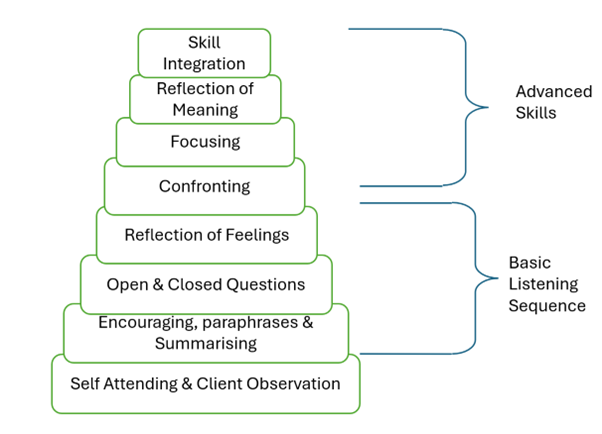
Counselling Skills
Nelson-Jones (2000) describes this relationship as collaborative, where the counsellor facilitates exploration and change while respecting the client’s autonomy. The counselee is viewed as an active participant rather than a passive recipient of advice.
Core Conditions of the Relationship
The core conditions of relationship include:

Therapeutic Conditions According to Rogers
1. Empathy
Empathy involves understanding the client’s experiences from their perspective and communicating that understanding. Empathy fosters emotional safety and encourages honest self-disclosure (Gelso & Fretz, 1995).
2. Genuineness
Genuineness refers to the counsellor’s authenticity and openness. When counsellors are genuine, clients are more likely to trust the process and engage meaningfully (Gladding, 2014).
3. Unconditional Positive Regard
Unconditional positive regard involves accepting the client without judgment. This acceptance helps clients explore difficult emotions without fear of rejection (Corey, 2008).
Trust and Confidentiality
Trust is the foundation of the counsellor–counselee relationship. Confidentiality assures clients that their personal information will be protected, except in situations involving harm or legal requirements. Ethical practice strengthens trust and safeguards client welfare (Kottler & Shepard, 2008).
Boundaries and Professional Ethics
Professional boundaries distinguish counselling relationships from personal relationships. Clear boundaries prevent dependency, role confusion, and ethical violations. Ethical guidelines emphasize competence, informed consent, confidentiality, and respect for diversity (Capuzzi & Gross, 2008).
Role of the Relationship in Change
The counsellor–counselee relationship itself can be therapeutic. A supportive relationship helps clients develop self-awareness, emotional regulation, and coping skills. In child and adolescent counselling, a strong relationship is particularly important for engagement and trust (Kapur, 2011; Mash & Wolfe, 1999).
Group counselling also relies on the quality of relationships among members and the counsellor to promote growth and feedback (Corey, 2008).
Developmental and Cultural Considerations
The counselling relationship must be sensitive to developmental stages and cultural contexts. Children require warmth and structure, while adolescents value respect and autonomy (Berk, 2003; Papalia et al., 2004). Cultural values influence communication styles, expectations, and help-seeking behavior.
Conclusion
The counsellor–counselee relationship is the cornerstone of effective counselling. Empathy, genuineness, trust, and ethical practice create a safe environment for exploration and change. When counsellors establish strong, respectful, and professional relationships, clients are empowered to understand themselves and move toward healthier functioning.
References
Berk, L. E. (2003). Child development (6th ed.). Prentice Hall of India.
Capuzzi, D., & Gross, D. R. (2008). Counseling and psychotherapy. Pearson Education.
Corey, G. (2008). Theory and practice of group counseling. Brooks/Cole.
Gelso, C. J., & Fretz, B. R. (1995). Counselling psychology. Prism Books.
Gibson, R. L., & Mitchell, M. H. (2003). Introduction to counselling and guidance. Pearson Education.
Gladding, S. T. (2014). Counselling: A comprehensive profession. Pearson Education.
Kapur, M. (2011). Counselling children with psychological problems. Dorling Kindersley.
Kottler, J. A., & Shepard, D. S. (2008). Counselling theory and practices. Cengage Learning.
Mash, E. J., & Wolfe, D. A. (1999). Abnormal child psychology. Brooks/Cole.
Nelson-Jones, R. (2000). Introduction to counselling skills. Sage Publications.
Papalia, D. E., Olds, S. W., & Feldman, R. D. (2004). Human development. Tata McGraw-Hill.
Niwlikar, B. A. (2025, December 19). The Counsellor-Counselee Relationship and 3 Important Conditions of It. Careershodh. https://www.careershodh.com/counsellor-counselee-relationship/