
Introduction
Creativity is the ability to generate original, novel, and valuable ideas or products. Measuring creativity has historically been challenging due to its complex, multifaceted nature.
Among creativity assessments, the Passi Test of Creativity (PTC) stands out for its attempt to evaluate creative potential across multiple dimensions. Developed by Balwant S. Passi in the 1970s, the PTC is particularly influential in the Indian context, where it was designed to assess creativity in school-aged children but has since been applied more broadly.
Passi Test of Creativity
Read More- TTCT
Theoretical Foundations
The PTC is influenced by Guilford’s Structure of Intellect Model, which proposed that creativity involves distinct abilities:
- Fluency: Producing many ideas.
- Flexibility: Generating ideas from different categories.
- Originality: Producing unique ideas.
- Elaboration: Adding details to basic ideas (Guilford, 1967).
Passi’s framework adapts these dimensions to fit Indian cultural and educational settings, arguing that creativity is a measurable set of cognitive abilities that can be cultivated through education (Passi, 1979).
Structure and Components
The Passi Test of Creativity consists of two main parts:
- Verbal Creativity Tasks: Assess divergent thinking in language-based tasks.
- Figural Creativity Tasks: Assess creative thinking through drawings or graphical tasks.
Each part is designed to measure three core dimensions:
- Fluency
- Flexibility
- Originality
For example:
- Verbal tasks include exercises such as “Unusual Uses for Common Objects” or “Consequences of Hypothetical Events.”
- Figural tasks involve incomplete figures to be completed creatively.
The test typically takes 60-90 minutes to administer.
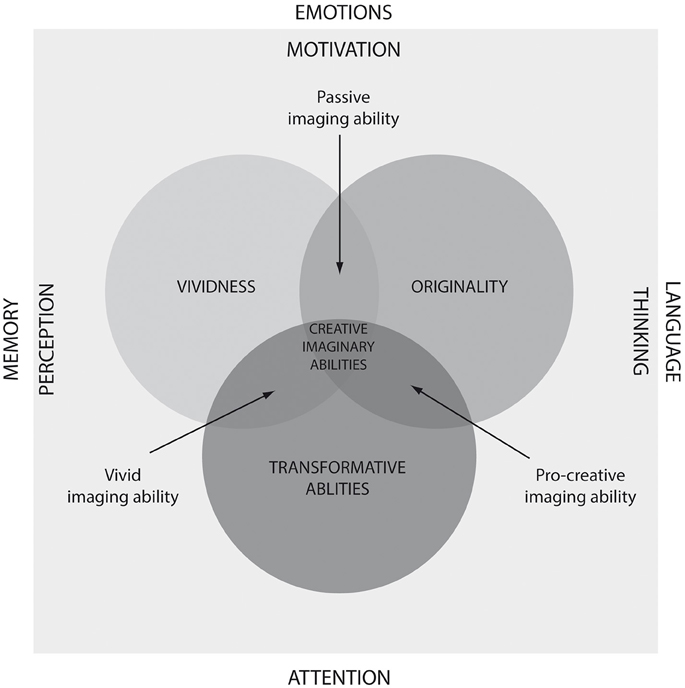
Creative Thinking
Administration
- Administered individually or in small groups.
- Instructions are clear, but examples are often culturally adapted for Indian students.
- Responses are scored manually based on defined criteria for fluency (number of ideas), flexibility (variety of categories), and originality (rarity of ideas).
Scoring and Interpretation
- Fluency Score: Total number of relevant ideas produced.
- Flexibility Score: Number of different categories represented in responses.
- Originality Score: Based on statistical infrequency in a normative sample.
Combined scores yield a Total Creativity Score, which can be compared to normative data for interpretation.
Psychometric Properties
Reliability
Passi (1979) reported:
- Test-retest reliability
- Split-half reliability
Validity
- Content validity established through expert reviews of tasks’ appropriateness.
- Construct validity supported by correlations with other creativity measures, like the Torrance Tests of Creative Thinking (Torrance, 1974).
Norms
Normative data were initially developed using Indian school children aged 10-16, providing percentile scores and interpretive ranges. However, updated norms are limited, making modern comparisons challenging.
Applications
Some application of the tests include-
1. Education
- Identifying creatively gifted students.
- Developing individualized education plans.
- Designing enrichment programs.
2. Research
- Studying the role of creativity in academic achievement and problem-solving.
- Investigating cultural differences in creativity expression.
3. Counseling
- Supporting students who show high creativity but struggle in traditional academic settings.
Strengths of the PTC
- Culturally adapted for Indian contexts, reducing cultural bias seen in Western creativity tests.
- Addresses both verbal and figural creativity, providing a more comprehensive measure.
- Practical for schools and easily administered by teachers with training.
Limitations
- Limited use outside India; cultural specificity can limit cross-cultural comparability.
- Scoring subjectivity: originality ratings depend on evaluator judgment.
- Some items may become outdated with social and technological changes.
Comparisons with Other Creativity Tests
Compared to Torrance Tests of Creative Thinking (TTCT), the PTC:
- Is shorter in administration time.
- Has simpler tasks, making it suitable for students with lower literacy levels.
- Provides more explicit flexibility scoring.
However, TTCT offers more robust international norms and updated scoring manuals (Kim, 2006).
Recent Developments
Recent Indian researchers have called for:
- Digital adaptations of the PTC for online administration.
- Norm updates to reflect contemporary educational settings.
- Expansion to measure additional creativity dimensions like elaboration and aesthetic sensitivity (Kumar & Chaudhary, 2016).
Conclusion
The Passi Test of Creativity is a valuable tool for assessing creativity in culturally relevant ways, especially in Indian educational settings. While it has limitations, its focus on fluency, flexibility, and originality provides insight into divergent thinking skills. Continued efforts to modernize and validate the PTC will enhance its relevance and utility.
References
Guilford, J. P. (1967). The nature of human intelligence. New York: McGraw-Hill.
Kim, K. H. (2006). Can we trust creativity tests? A review of the Torrance Tests of Creative Thinking (TTCT). Creativity Research Journal, 18(1), 3–14.
Kumar, R., & Chaudhary, P. (2016). A critical study of creativity tests in India: Implications for modern education. Journal of Indian Psychology, 34(2), 45–58.
Passi, B. S. (1979). Passi Tests of Creativity. Agra: National Psychological Corporation.
Torrance, E. P. (1974). Torrance Tests of Creative Thinking: Norms-Technical Manual. Bensenville, IL: Scholastic Testing Service.
Niwlikar, B. A. (2025, July 16). Passi Test of Creativity and 4 Important Components of Creativity. Careershodh. https://www.careershodh.com/passi-test-of-creativity/