DSM-5 and ICD-11: Definition, Criteria, and 2 Important Mental Disorder Classification Systems

Introduction Mental disorders represent complex disturbances in cognition, emotion, and behavior that cause significant distress and impair functioning. Their classification and diagnosis are fundamental for research, treatment, and policy formulation. Read More…
5 Important Health Promoting Activities in Old Age

Introduction Health promoting activities have emerged as vital components of maintaining well-being across the human lifespan. In the context of aging, stress management, exercise, yoga, meditation, and mental health interventions Read More…

State and Public Policies: 4 Important Considerations

Introduction As societies age, the role of state and public policies becomes increasingly central in safeguarding the well-being of older adults. The shift in demographics, characterized by longer life expectancies Read More…

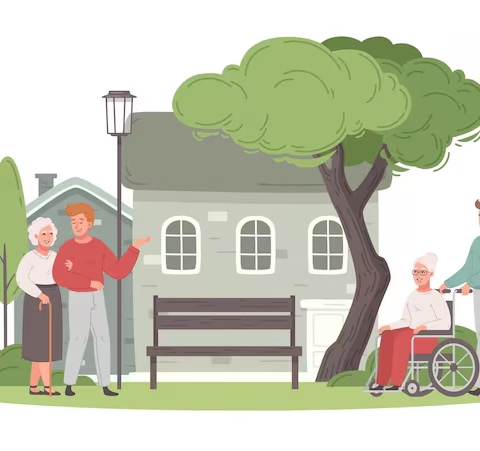
Institutional and Non-Institutional Living: 4 Important Types of Living Arrangement for the Elderly

Introduction Housing arrangements directly affect health, independence, emotional well-being, and the overall quality of life of the elderly. Broadly, these can be divided into Institutional and Non-Institutional Living options, such Read More…

8 Important Issues Affecting the Mental Health of the Elderly

Introduction Aging is a complex developmental stage characterized by biological, psychological, and social changes. While many elderly individuals adapt successfully to later life, a significant proportion experience challenges that affect Read More…

Social and Family Networks: 3 Important Networks of Support

Introduction Social and family networks are central to the psychological well-being of the elderly. Unlike earlier stages of life, where individuals often engage in occupational roles, peer relationships, and childrearing, Read More…

Suicide Prevention Awareness Month 2025: One Conversation Can Make a Difference

Every 40 seconds, somewhere in the world, a person dies by suicide (World Health Organization (WHO), 2021). This translates to over 700,000 deaths annually, leaving millions of families and communities Read More…

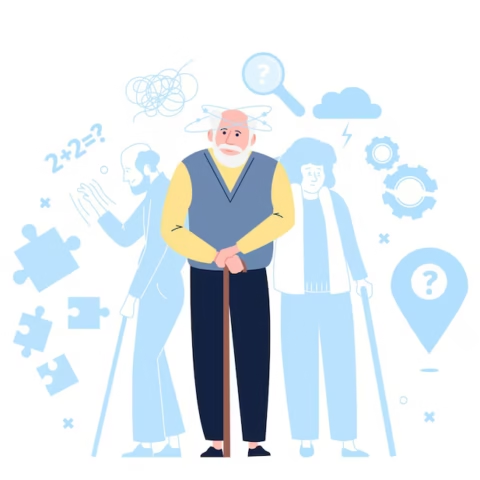
4 Important Disorders of Aging

Introduction Aging is not solely a biological process but also a psychosocial journey that often entails vulnerabilities to mental health problems. While many older adults age successfully and remain psychologically Read More…

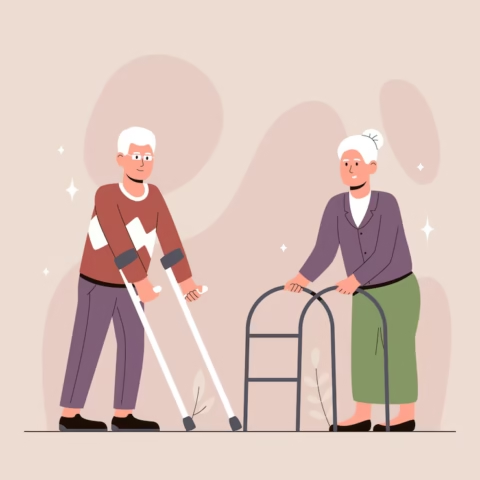
Physical Health and Aging: 6 Important Risk Behaviors

Introduction Aging is a universal process characterized by progressive biological, psychological, and social changes. While it is inevitable, the experience of aging is not uniform—individuals vary widely in terms of Read More…

Coping & Aging: Religious-Spiritual Coping, 4 Important Types of Coping, and External Resources

Introduction As individuals progress into later stages of life, they face unique stressors such as health decline, bereavement, financial insecurity, and changes in social roles. Coping mechanisms become crucial for Read More…

Stress and Aging: 6 Important Dimensions of It

Introduction Aging is a lifelong process characterized by biological, psychological, and social changes that shape the human experience. One critical aspect of aging is how individuals encounter and respond to Read More…